

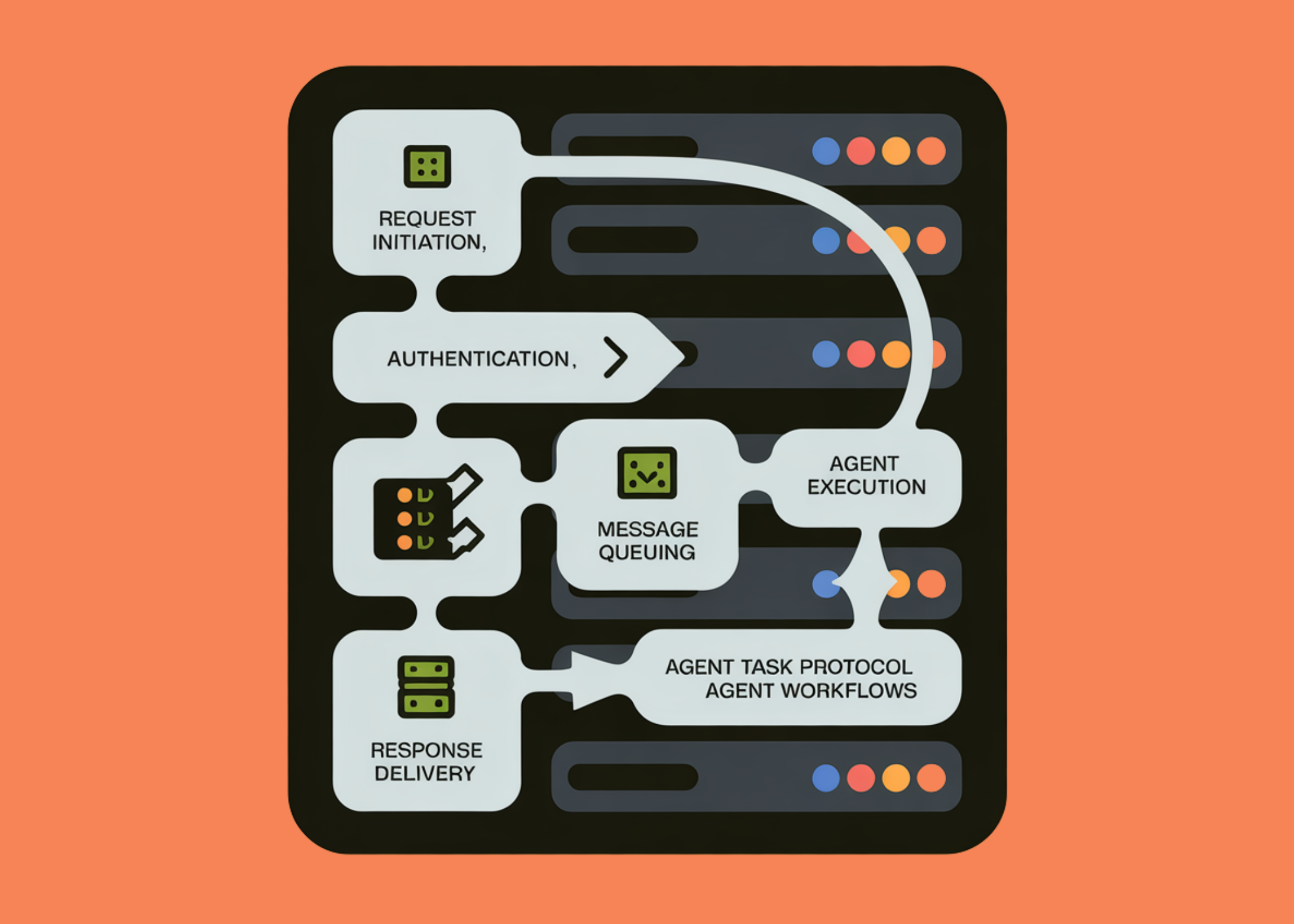

In this tutorial, we build a clean, advanced demonstration of modern MCP design by focusing on three core ideas: stateless communication, strict SDK-level validation, and asynchronous, long-running operations. We implement a minimal MCP-like protocol using structured envelopes, signed requests, and Pydantic-validated tools to show how agents and services can interact safely without relying on persistent sessions. Check out the FULL CODES here.
from dataclasses import dataclass
from typing import Any, Dict, Optional, Literal, List
from pydantic import BaseModel, Field, ValidationError, ConfigDict
def _now_ms():
return int(time.time() * 1000)
def _uuid():
return str(uuid.uuid4())

def _canonical_json(obj):
return json.dumps(obj, separators=(“,”, “:”), sort_keys=True).encode()
def _hmac_hex(secret, payload):
return hmac.new(secret, _canonical_json(payload), hashlib.sha256).hexdigest()
We set up the core utilities required across the entire system, including time helpers, UUID generation, canonical JSON serialization, and cryptographic signing. We ensure that all requests and responses can be deterministically signed and verified using HMAC. Check out the FULL CODES here.
model_config = ConfigDict(extra=”forbid”)
v: Literal[“mcp/0.1”] = “mcp/0.1″
request_id: str = Field(default_factory=_uuid)
ts_ms: int = Field(default_factory=_now_ms)
client_id: str
server_id: str
tool: str
args: Dict[str, Any] = Field(default_factory=dict)
nonce: str = Field(default_factory=_uuid)
signature: str
class MCPResponse(BaseModel):
model_config = ConfigDict(extra=”forbid”)
v: Literal[“mcp/0.1”] = “mcp/0.1”
request_id: str
ts_ms: int = Field(default_factory=_now_ms)
ok: bool
server_id: str
status: Literal[“ok”, “accepted”, “running”, “done”, “error”]
result: Optional[Dict[str, Any]] = None
error: Optional[str] = None
signature: str
We define the structured MCP envelope and response formats that every interaction follows. We enforce strict schemas using Pydantic to guarantee that malformed or unexpected fields are rejected early. It ensures consistent contracts between clients and servers, which is critical for SDK standardization. Check out the FULL CODES here.
model_config = ConfigDict(extra=”forbid”)
server_id: str
fingerprint: str
capabilities: Dict[str, Any]
class BatchSumIn(BaseModel):
model_config = ConfigDict(extra=”forbid”)
numbers: List[float] = Field(min_length=1)
class BatchSumOut(BaseModel):
model_config = ConfigDict(extra=”forbid”)
count: int
total: float
class StartLongTaskIn(BaseModel):
model_config = ConfigDict(extra=”forbid”)
seconds: int = Field(ge=1, le=20)
payload: Dict[str, Any] = Field(default_factory=dict)
class PollJobIn(BaseModel):
model_config = ConfigDict(extra=”forbid”)
job_id: str
We declare the validated input and output models for each tool exposed by the server. We use Pydantic constraints to clearly express what each tool accepts and returns. It makes tool behavior predictable and safe, even when invoked by LLM-driven agents. Check out the FULL CODES here.
class JobState:
job_id: str
status: str
result: Optional[Dict[str, Any]] = None
error: Optional[str] = None
class MCPServer:
def __init__(self, server_id, secret):
self.server_id = server_id
self.secret = secret
self.jobs = {}
self.tasks = {}
def _fingerprint(self):
return hashlib.sha256(self.secret).hexdigest()[:16]
async def handle(self, env_dict, client_secret):
env = MCPEnvelope(**env_dict)
payload = env.model_dump()
sig = payload.pop(“signature”)
if _hmac_hex(client_secret, payload) != sig:
return {“error”: “bad signature”}
if env.tool == “server_identity”:
out = ServerIdentityOut(
server_id=self.server_id,
fingerprint=self._fingerprint(),
capabilities={“async”: True, “stateless”: True},
)
resp = MCPResponse(
request_id=env.request_id,
ok=True,
server_id=self.server_id,
status=”ok”,
result=out.model_dump(),
signature=””,
)
elif env.tool == “batch_sum”:
args = BatchSumIn(**env.args)
out = BatchSumOut(count=len(args.numbers), total=sum(args.numbers))
resp = MCPResponse(
request_id=env.request_id,
ok=True,
server_id=self.server_id,
status=”ok”,
result=out.model_dump(),
signature=””,
)
elif env.tool == “start_long_task”:
args = StartLongTaskIn(**env.args)
jid = _uuid()
self.jobs[jid] = JobState(jid, “running”)
async def run():
await asyncio.sleep(args.seconds)
self.jobs[jid].status = “done”
self.jobs[jid].result = args.payload
self.tasks[jid] = asyncio.create_task(run())
resp = MCPResponse(
request_id=env.request_id,
ok=True,
server_id=self.server_id,
status=”accepted”,
result={“job_id”: jid},
signature=””,
)
elif env.tool == “poll_job”:
args = PollJobIn(**env.args)
job = self.jobs[args.job_id]
resp = MCPResponse(
request_id=env.request_id,
ok=True,
server_id=self.server_id,
status=job.status,
result=job.result,
signature=””,
)
payload = resp.model_dump()
resp.signature = _hmac_hex(self.secret, payload)
return resp.model_dump()
We implement the stateless MCP server along with its async task management logic. We handle request verification, tool dispatch, and long-running job execution without relying on session state. By returning job identifiers and allowing polling, we demonstrate non-blocking, scalable task execution. Check out the FULL CODES here.
def __init__(self, client_id, secret, server):
self.client_id = client_id
self.secret = secret
self.server = server
async def call(self, tool, args=None):
env = MCPEnvelope(
client_id=self.client_id,
server_id=self.server.server_id,
tool=tool,
args=args or {},
signature=””,
).model_dump()
env[“signature”] = _hmac_hex(self.secret, {k: v for k, v in env.items() if k != “signature”})
return await self.server.handle(env, self.secret)
async def demo():
server_secret = b”server_secret”
client_secret = b”client_secret”
server = MCPServer(“mcp-server-001”, server_secret)
client = MCPClient(“client-001”, client_secret, server)
print(await client.call(“server_identity”))
print(await client.call(“batch_sum”, {“numbers”: [1, 2, 3]}))
start = await client.call(“start_long_task”, {“seconds”: 2, “payload”: {“task”: “demo”}})
jid = start[“result”][“job_id”]
while True:
poll = await client.call(“poll_job”, {“job_id”: jid})
if poll[“status”] == “done”:
print(poll)
break
await asyncio.sleep(0.5)
await demo()
We build a lightweight stateless client that signs each request and interacts with the server through structured envelopes. We demonstrate synchronous calls, input validation failures, and asynchronous task polling in a single flow. It shows how clients can reliably consume MCP-style services in real agent pipelines.
In conclusion, we showed how MCP evolves from a simple tool-calling interface into a robust protocol suitable for real-world systems. We started tasks asynchronously and poll for results without blocking execution, enforce clear contracts through schema validation, and rely on stateless, signed messages to preserve security and flexibility. Together, these patterns demonstrate how modern MCP-style systems support reliable, enterprise-ready agent workflows while remaining simple, transparent, and easy to extend.
Check out the FULL CODES here. Also, feel free to follow us on Twitter and don’t forget to join our 100k+ ML SubReddit and Subscribe to our Newsletter. Wait! are you on telegram? now you can join us on telegram as well.
Asif Razzaq is the CEO of Marktechpost Media Inc.. As a visionary entrepreneur and engineer, Asif is committed to harnessing the potential of Artificial Intelligence for social good. His most recent endeavor is the launch of an Artificial Intelligence Media Platform, Marktechpost, which stands out for its in-depth coverage of machine learning and deep learning news that is both technically sound and easily understandable by a wide audience. The platform boasts of over 2 million monthly views, illustrating its popularity among audiences.