



Amid crypto’s ongoing DeFi hack crisis, Humanity Protocol’s H token crash has turned a biometric identity project into the latest example of the sector’s oldest failure mode: control of keys.
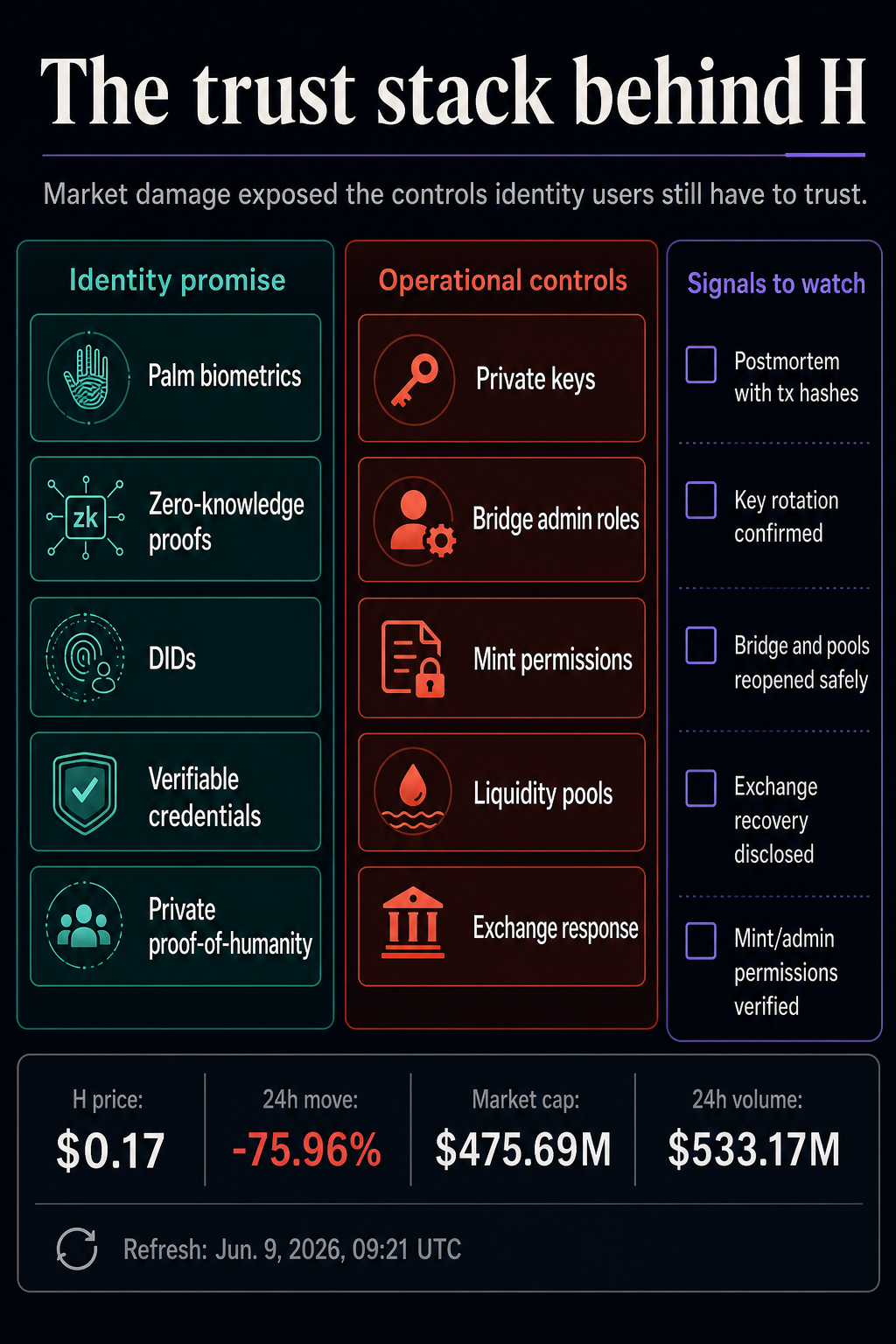
The project is built around proof-of-humanity infrastructure, with official materials describing palm biometrics, zero-knowledge proofs, decentralized identifiers, and verifiable credentials as parts of a privacy-preserving identity stack.
Yet the H crisis unfolded through the operational layer that still underpins much of crypto: laptops, private keys, bridge controls, token liquidity, and exchange response.
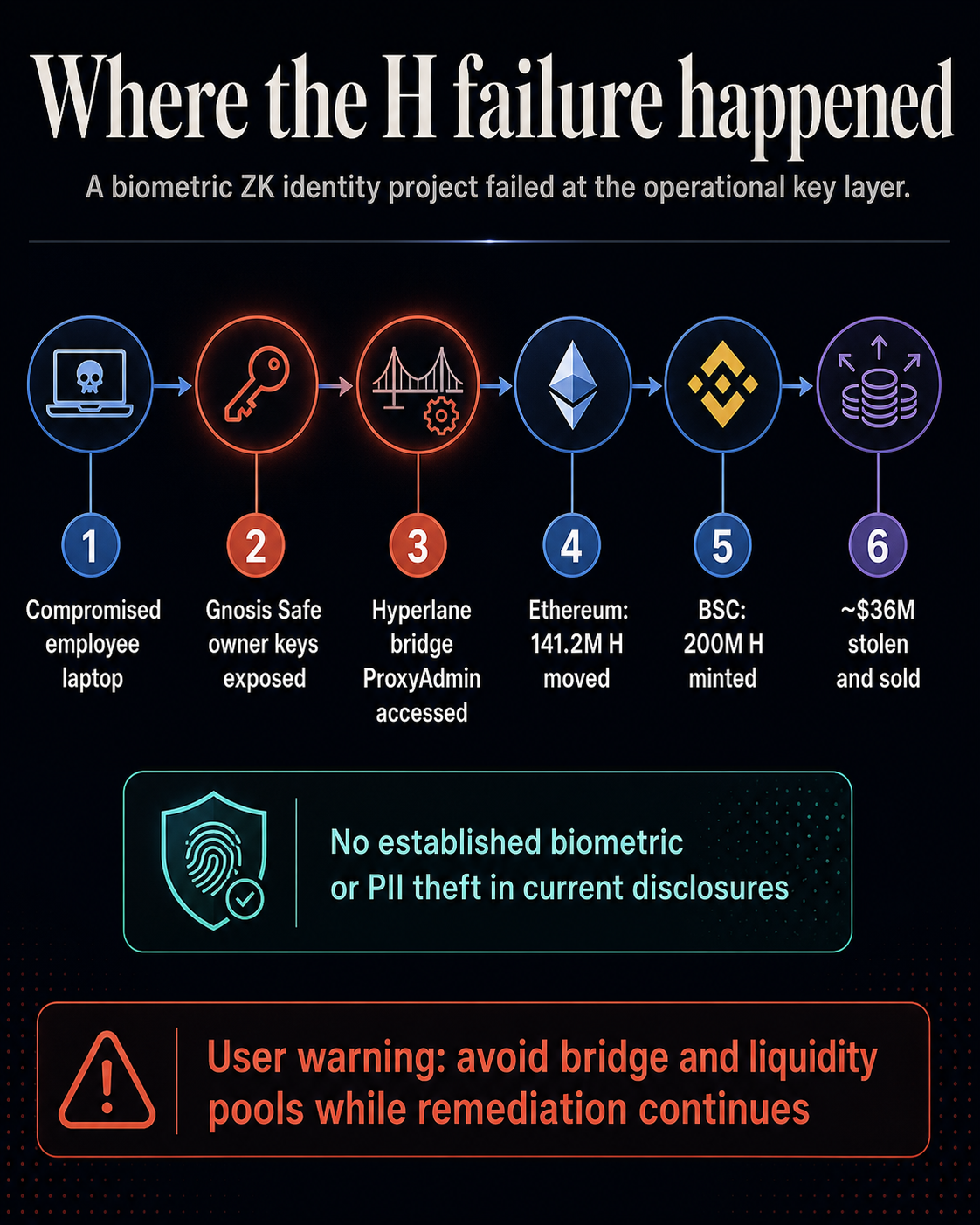
In an incident update, Humanity said the June 8 attack affected H token activity on Ethereum and BNB Smart Chain, began with a compromised employee laptop, exposed Gnosis Safe owner keys for a Hyperlane bridge ProxyAdmin, and led to roughly $36 million being stolen and sold.

The update also said about 141.2 million H was moved on Ethereum and 200 million H was minted on BNB Smart Chain. Earlier onchain analysis had already put the drain above $30 million across at least 17 wallets linked to, or interacting with, Humanity Protocol.
At press time, the H market page showed the token at $0.17, down 76% over 24 hours, with a $476 million market cap and $533 million in 24-hour volume.
The selloff made the loss of confidence visible. The deeper issue is why an identity project asking users and applications to trust its rails could still be exposed through admin-key custody.
The disclosures available so far attribute the incident to key and bridge authority, and they have not established that Humanity users’ biometric data or personally identifiable information was stolen.
That caveat is essential. The incident is about wallet and bridge authority rather than a confirmed biometric data breach. For a project whose public pitch centers on identity trust, the distinction still leaves a serious problem: much of the trust sits outside the cryptographic claim.
The failure point was ordinary custody
Humanity’s own account, from its incident summary, points to a familiar chain of failure.
A compromised employee laptop exposed owner keys tied to a Gnosis Safe. Those keys gave the attacker access to a Hyperlane bridge ProxyAdmin.
From there, the incident moved across Ethereum and BNB Smart Chain, combining token movement, selling pressure, and unauthorized minting on BSC.
The distinction is material: A zero-knowledge proof can reduce what a user reveals when proving an attribute. A biometric proof-of-humanity system can be designed to distinguish one person from another without broadcasting raw personal data.
Those features still leave a separate obligation to secure the keys that control bridges, liquidity, admin roles, and minting permissions.
The bridge warning made that clear in real time. Humanity warned users not to interact with the project’s bridge or liquidity pools while the team worked with security firms and exchange partners.
Founder Terence Kwok also tied the incident to compromised private keys belonging to a Humanity Foundation member. Those statements shifted attention away from speculation about a generic exploit and toward an operational-security breakdown with token-supply consequences.

A compact version of the confirmed public record looks like this:
PointPublic recordAttack dateHumanity said the attack occurred on June 8, 2026.Stated initial causeA compromised employee laptop exposed Gnosis Safe owner keys.Control layerThe exposed keys were tied to a Hyperlane bridge ProxyAdmin.Reported value impactHumanity’s incident update cited roughly $36 million stolen and sold.Token movementThe update cited about 141.2 million H moved on Ethereum and 200 million H minted on BSC.User warningHumanity told users not to interact with the bridge or liquidity pools while safety work continued.
The table also shows why the H crash is more than a market repricing. When a bridge-admin role and minting path are part of the fact pattern, the market is pricing uncertainty over token supply, liquidity venues, bridge state, and recovery controls after remediation.
The token crash made the trust problem visible
H’s market move shows how quickly a trust narrative can become a liquidity event. A token tied to an identity network also functions as a market-facing proxy for whether users, exchanges, and applications believe the project’s operational rails are intact.
The 76% 24-hour decline shown on the asset page came while broader coin rankings showed a steadier market than H’s chart suggested.
H fell far more sharply than the broader market after incident reports, bridge warnings, and unresolved questions around stolen and minted tokens.
The developing timeline is important. Initial reports described more than $30 million drained and at least 17 wallets affected.
Later, Humanity’s update put the stolen-and-sold amount at roughly $36 million and described the BSC minting component. Lookonchain had earlier flagged 100 million H minted on BSC, but a later update cited 200 million.
For exchanges and liquidity providers, the central question is whether the affected authority paths have been disabled, rotated, audited, and independently confirmed.
If stolen or unauthorized-minted tokens remain in circulation, the market has to price in potential freezes, recoveries, liquidity gaps, or further disclosures. If the bridge and admin controls are fully contained, the damage may remain severe but bounded to operational failure and market confidence.
If those controls remain unclear, the token’s role inside Humanity’s identity ecosystem becomes harder to evaluate.
The answer also affects how future identity integrations will view the H token. In a normal token selloff, buyers can separate price volatility from product function.
In a bridge-admin and minting incident, that separation becomes harder because the token rail, liquidity path, and operating institution are all part of the same trust claim.
The question for partners includes whether the project can show that the authority structure behind H is now clean, rotated, and externally reviewable.
Advanced identity still depends on ordinary controls
Humanity’s official materials describe a protocol designed around private identity verification. The project’s protocol page presents Humanity as an identity layer using biometrics, zero-knowledge proofs, decentralized identifiers, and verifiable credentials.
Its docs describe palm-print enrollment, scanner-based vein mapping, and zero-knowledge proofs intended to keep personal data confidential.
A user can believe that a ZK identity flow minimizes disclosure and still have to trust that the project’s operators protect laptops, hardware wallets, Safe owners, bridge admin roles, deployment keys, and exchange-response playbooks.
The Humanity incident puts that difference front and center.
Crypto has seen plenty of private-key incidents. What makes this one different is the category of project affected.
A biometric identity network sells assurance in a way a trading app or meme token does not. It asks users and partners to believe that the project can mediate trust between humans, applications, credentials, and blockchains.
A private-key compromise can leave the ZK identity concept intact while undercutting confidence in the institution operating the rails.
Still, current disclosures provide no source basis to say that palm scans, identity credentials, or user PII were accessed.
The stated incident mechanics point to token, bridge, admin, and custody controls. The risk frame is an identity project keeping its privacy story intact while still failing at a layer users rarely see but must implicitly trust.
Humanity’s bridge warning also places the incident inside a broader DeFi security pattern.
Recent coverage of multi-chain exploit risk noted that newer failures can spread through shared controls, repeated deployments, and cross-chain infrastructure rather than remain confined to a single isolated smart contract.
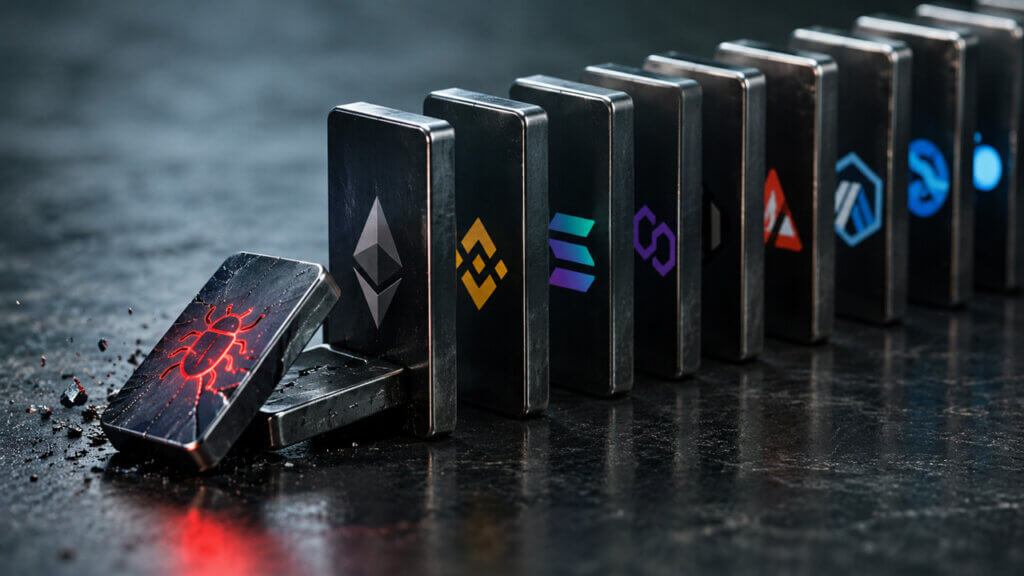
Humanity’s update describes the operational route that can turn a single endpoint compromise into a multi-chain token event.
Private-key risk has already become a recurring user-trust issue across crypto. Coverage of a private-key compromise showed how quickly operational custody can become a public market and user-trust problem.
Humanity now extends that pattern into the identity sector, where the stakes are partly financial and partly reputational.
There is also a limited parallel with recent Zcash coverage. The Zcash case involved a different technical issue, but the market reaction carried a similar lesson: sophisticated cryptographic branding leaves questions of trust intact.

When a hidden assumption is exposed, whether in implementation, operations, custody, or response, markets can reprice confidence faster than teams can explain the difference.
The next disclosures will decide which version of the Humanity incident survives. A full postmortem with transaction hashes, affected contracts, key-rotation steps, exchange actions, bridge remediation, and independent security review would help contain the incident as a severe but understood operational failure.
Confirmation that bridge deposits, withdrawals, liquidity pools, and mint/admin permissions are safe would carry more weight than any short-term token bounce.
The opposite path is more damaging. If questions about unauthorized minting persist, if bridge controls remain unclear, or if exchange recovery is incomplete, the incident becomes a token-supply and cross-chain trust crisis for a project trying to be an identity trust layer.
For now, the disclosed mechanics point to an ordinary private-key failure beneath an advanced identity pitch. That is the uncomfortable answer to the question posed by the H crash: ZK and biometrics can reduce what users reveal while leaving them exposed to the people and keys that operate the system.